
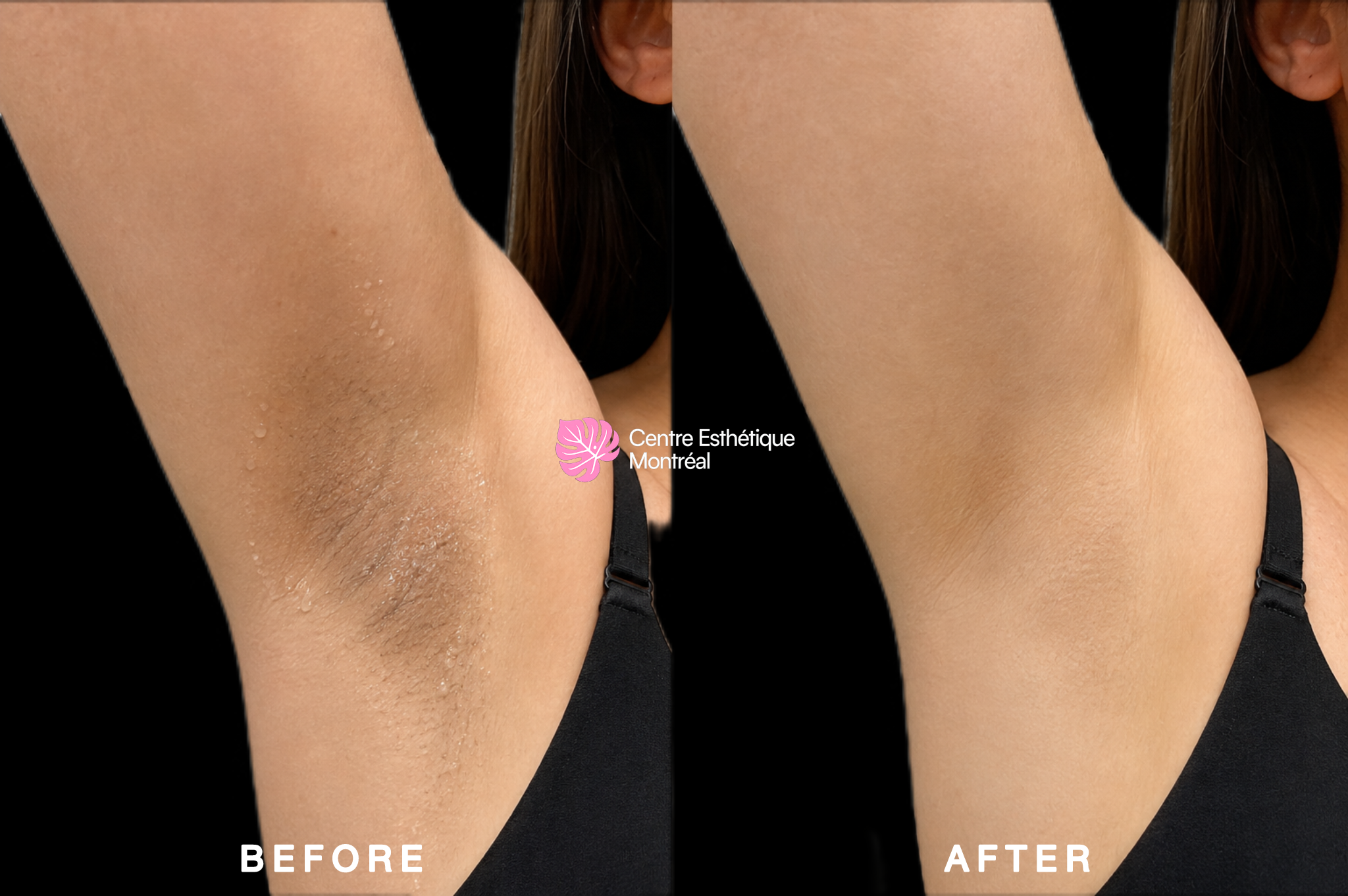
Hyperhidrosis: When Sweating Becomes a Medical Concern
Sweating is the body’s natural way of regulating temperature. It is normal during exercise, hot weather, stress, or illness. But when sweating happens without an obvious trigger, soaks through clothing, or interferes with everyday life, it may be hyperhidrosis, a medical condition that causes excessive sweating beyond what the body needs for cooling.
Hyperhidrosis can affect comfort, confidence, work, relationships, and social activities. Recognizing the signs is the first step toward finding an appropriate solution.
What is hyperhidrosis?
Hyperhidrosis can cause persistent dampness, visible droplets, or soaked clothing even when someone is resting or the environment is cool. It commonly affects the underarms, palms, feet, face, or scalp.
Sweating may be excessive if you regularly:
- Sweat heavily without heat or physical activity
- Soak through clothing shortly after getting dressed
- Avoid certain fabrics, colours, handshakes, or social situations
- Feel that sweating controls your routine or confidence
Hyperhidrosis is not caused by poor hygiene. It is a recognized and treatable medical condition.
Primary versus secondary hyperhidrosis
Primary focal hyperhidrosis occurs without another medical condition causing it. It often begins early in life, affects specific areas on both sides of the body, and generally stops during sleep.
Secondary hyperhidrosis is caused by another health condition, medication, or physiological change. It may begin suddenly, affect the entire body, or happen at night. Possible contributors include hormonal changes, thyroid disorders, diabetes, infections, menopause, and certain medications.
Sudden, generalized, or unexplained nighttime sweating should be evaluated by a healthcare professional before pursuing treatment.
When should excessive sweating be medically evaluated?
Speak with a healthcare professional if sweating:
- Begins suddenly or becomes much heavier without explanation
- Regularly soaks your sleepwear or bedding
- Affects your entire body instead of one localized area
- Disrupts daily activities or sleep
- Causes emotional distress or social withdrawal
- Occurs with fever, unexplained weight loss, weakness, or a racing heartbeat
- Started after beginning or changing a medication
Seek urgent medical attention if heavy sweating occurs with chest pain, lightheadedness, nausea, cold or clammy skin, a rapid pulse, or pain extending to the jaw, neck, shoulders, or arms.
How is hyperhidrosis diagnosed?
A consultation reviews when sweating began, the areas affected, whether it happens during sleep, and how it affects daily life. Medications, health history, and other symptoms are also considered.
If secondary hyperhidrosis is suspected, additional medical testing may be recommended. A starch–iodine test may help map active sweating areas before treatment.
What treatments are available?
Treatment depends on the cause, location, and severity. Options include clinical-strength antiperspirants, prescription medication, iontophoresis, botulinum toxin injections, and selected medical or surgical procedures.
If another condition or medication is causing the sweating, addressing that underlying cause comes first.
Botulinum toxin treatment for excessive sweating
Botulinum toxin temporarily reduces localized sweating by blocking the signal that activates sweat glands. It is commonly used for excessive underarm sweating.
The physician maps the area and administers small, superficial injections. Most patients resume their routine immediately. Temporary redness, tenderness, small bumps, or bruising may occur.
Many patients notice improvement within approximately 7 to 10 days. Results vary and generally last several months before sweating gradually returns.
The treatment acts locally and does not prevent normal temperature regulation or redirect underarm sweat elsewhere.
Hyperhidrosis treatment in Montreal
At Centre Esthétique Montréal, treatment begins with a medical consultation. Our physician reviews your symptoms, medical history, medications, and goals to determine whether injections are suitable or further investigation should come first.
Hyperhidrosis treatment is available for $1,000 per treatment at our Vieux-Port and Village locations. Results, treatment intervals, and eligibility vary and are confirmed during consultation.
You do not have to organize your life around sweating
If excessive sweating affects what you wear, how you work, or how comfortable you feel around others, it deserves to be taken seriously. Contact Centre Esthétique Montréal to book a physician-led consultation and discover whether hyperhidrosis treatment is right for you.
This article is for educational purposes and does not replace medical diagnosis or treatment from a qualified healthcare professional.


